Media Reviews
"A brilliant novel of ideas.... A powerful meditation on life, death, and the vanity of human wishes, all illustrated by a poem that would do Homer proud. A stunningly imagined revisitation of an ancient past." ―Kirkus Reviews (starred review)
"Original, thought-provoking, and utterly absorbing… [An] inventive novel about a classics scholar who makes a thrilling discovery." ―Booklist (starred review)
"Inspired… An appealing labor of love." ―Publishers Weekly
This information about Son of Nobody was first featured
in "The BookBrowse Review" - BookBrowse's membership magazine, and in our weekly "Publishing This Week" newsletter. Publication information is for the USA, and (unless stated otherwise) represents the first print edition. The reviews are necessarily limited to those that were available to us ahead of publication. If you are the publisher or author and feel that they do not properly reflect the range of media opinion now available, send us a message with the mainstream reviews that you would like to see added.
Any "Author Information" displayed below reflects the author's biography at the time this particular book was published.

Reader Reviews
Write your own review
Susan_Ts
Son of Nobody MAGNIFICENT! The Son of Nobody, by Yann Martel, is a brilliant retelling of the Trojan war from the point of view of a common foot soldier fighting with the Greeks against the Trojans. Two tragic tales are told in parallel, literally one on top of the other. One story is the song of Psoas of Midea, son of nobody. The second narrative is that of Harlow Donne, a Classics scholar from Canada, who authors his own tragic tale in the footnotes of his translation of Psoas’ epic poem. This beautifully crafted novel captures what is universal to the human experience, that across time and regardless of status, love, longing and loss are the same for everyone, and that the life story of one low-born is no less of a heroic journey than that of one high-born.
Enough supplemental information on Greek mythology and Homer’s Iliad is included in the footnotes for the reader to enjoy the story. However, if your memory of them is a little dusty, a quick refresher will certainly enhance your enjoyment. Read slowly and reflectively. This is a novel that should be savored.
Thanks to BookBrowse and W.W. Norton & Company for the advance reading copy of this book.
Pamela W. (Piney Flats, TN)
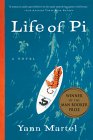
Back to Troy I chose to read Son of Nobody because its author Yann Martel also wrote The Life of Pi. I found that novel challenging and was interested to see what Yann had done with this new book. I wasn't disappointed. At first the format was off putting, but I googled The Iliad, which I've never read, and found that it was originally spoken and sung. This led me to read the parts of The Psoad out loud and then to read the commentary to myself. It was quite a scene at my house – me sitting in my chair and my dog sitting on her stool with me reading to her. She also found the book fascinating! The interweaving of explanation of text and Harlowe's personal life kept my interest. I really enjoyed the book and recommend it to people who don't mind a bit of a challenge.
Marion_Mueller
The Common Man's Trojan War Eppic The Iliad and The Odyssey provide versions of the Trojan War from the perspective of the elites–the kings, rulers, military leaders, and wealthy. Martel provides us with the common soldier’s version of war in ancient Troy. This version that Martel has envisioned is complex, confounded, confusing, coordinated, and will long be remembered by this reviewer. It is helpful to have a working knowledge of Greek and Roman mythology as well as The Iliad and The Odyssey.
Martel is writing several stories at one time : his version of The Psoad, the footnotes explaining the historical notes and references, and the main character’s personal tragic story about his wife and daughter. Even the format of the book is complicated. The epic poem about Psoas is printed on the top half of the page and the explanatory footnotes and personal story on the bottom of the page, sometimes the footnotes and personal story intertwining.
Martel makes literary and philosophical connections between the ancient writings and religious writings including the gospels. At times I agree with his interpretations, at other times I’m confounded and confused. And, that is why I will remember Son of Nobody for a long time.
Janine_S
Extraordinary! I wrestled with myself reading this book. It was a love-hate relationship often as I grappled with its structure and the retelling of The Iliad (I think it’s all those names I can’t pronounce) and with a character who refused to put fatherhood before scholarship. But by the end I grew to understand the profoundness of the story and appreciate that what you think should be a certain way, doesn’t have to be!
First the structure is the most unique I’ve ever seen. While it’s a story within a story as the author rewrites The Iliad from the perspective of a “nobody,” Psoad, it’s also a story of a scholar, Harlow Donne, as he studies a newly discovered Greek text of this Greek “nobody.” But these are then “divided” by a line as you would find in a history or nonfiction book where footnotes appear. Donne’s story is a “footnote” but is it? Take your time reading each. The poem is rather beautiful but the footnotes are the “meat” of the matter.
Both Donne and Psoad are nobodies. But while society may want to disregard nobodies, they are the predominant figures in it. That Psoad would dare to speak to or take on a person of vaulted stature in Greek society would be reprehensible as would Donne in disregarding the instructions of the Oxford Don, Cubitt, overseeing his sabbatical. This is the crux of the story I think. In the footnote sections, we learn of how both do this and what happens when they disregard the order of things.
Donne’s story is a study in scholarly concupiscence - what is more important: family or job/career? A tragic event brings this question to the fore. While Donne has a deep love for his family (he’s in England and they are in Canada), his choices in regard to them are shallow even though he tries to rationalize his work as a paean to his child. As to Psoad, he shows the same kind of stupidity but his story also represents how time doesn’t change much: nobodies and somebodies haven’t changed much through time.
Finally I was intrigued by the comparison at times in the footnotes between Psoad’s story and Jesus. Jesus came for the common man, which Psoad represents in his “nobodynness”. Our human vanity gets in the way of appreciating that we can be nobody and still be relevant.
Definitely this book is a deep story of “life, death,” grief and how our vanity gets in the way of honesty and meaning.
Thank you NetGalley and Norton for allowing me to read this ARC.
Joshua M. (westfield, NJ)
Son of Nobody Delivers The Life of Pi caught me and wouldn't let go — and I'm not someone who normally reads what I originally thought was a fantasy-like novel. But Pi was different. It was a thought-provoking good read. Yann Martel explored the concept of story, forcing us to examine why we believe one story but not another. Stories central to religious traditions came in for consideration. So when I saw the chance to submerge myself in another book by Martel, I grabbed it.
He didn't disappoint. Son of Nobody, his latest, heads in a somewhat different direction in content and definitely in style. Initially, it reads more like a monograph than a novel but stick with it and you'll be rewarded. From the start, the physical style appears off putting. Each page is split horizontally with his retelling of the Trojan War story up top and "footnotes" below.
Those "footnotes" violate the dictates of most writing coaches — no information dumps. But in this case, those "footnotes" prove to be immensely engaging with Harlow Donne, the main character, offering a running commentary of the epic and in the process casting light on the ancient Greeks . He does this without being too much of a lecture hall professor. And it's in the "footnotes" that he intersperses the story of his family's dissolve.
Donne, a professor of Greek at a Canadian college, gets a chance to study for a year at Oxford. Accepting the offer, however, would mean leaving his wife, Gail, and daughter, Helen, for a year. He opts to go anyway and as she drops him at the airport, Gail tells him to not come back.
At Oxford, he comes across shreds of papyrus that he assembles into The Psoad, a previous unknown version of the Trojan War story told from a commoner's view point. The son of nobody is The Psoad's central character..
The value of Son of Nobody comes in Martel's use of The Psoad's characters to question the why of war, to examine who — if anybody — benefits, to explore what — if anything — war changes.
He uses Donne's commentary to scrutinize the value of story, whether historical accuracy counts, whether stories should be seen as literature probing our lives rather than journalistic accounts. In doing so, he references Homer's The Iliad and The Odyssey as well as Jesus and the Gospels.
That's what gets you thinking. Couple of final points: you don't have to have read Homer's works to grasp the richness of Son of Nobody; second, I confess that about 50 pages in I was ready to give up. Too academic. Author showing off how much research he did. But then I though, this is Martel I'm missing something . So I went back and started over. Boy I'm glad I did.
Charity_M
Devastating, brilliant An ancient epic poem, set alongside a modern epic tragedy, this gut punch of a book tells the tale of a man researching a lost story.
The two run concurrently throughout the book, giving the reader a stark reminder of the universal emotions that follows us through centuries. While grief and regret may come in different forms, they are no less a plague today than they were a thousand years ago.
Son of Nobody challenges the reader, but makes the effort to work through these dual tales well worth it.
...16 more reader reviews